
Toxic Optic Neuropathy

Toxic Optic Neuropathy

Toxic Optic Neuropathy is a condition characterized by damage to the optical nerves due to exposure to colorful dangerous substances or nutritive scarcities. This impairment frequently results in a symmetric, bilateral drop in visual perceptivity and a significant loss of color perception. Because the filaments of the optical whim-whams are largely sensitive to metabolic changes, Toxic Optic Neuropathy can develop fleetly or over a prolonged period depending on the attention of the poison. Addressing the beginning chemical or nutritive detector is the most critical step in managing Toxic Optic Neuropathy to help unrecoverable atrophy.
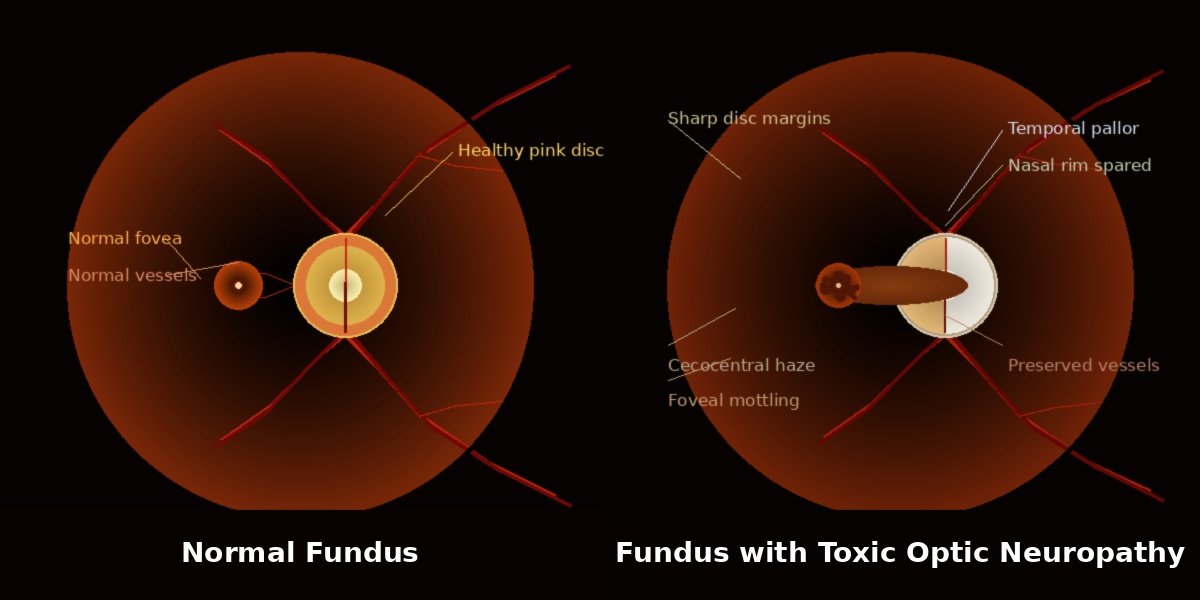
"Normal fundus versus toxic optic neuropathy fundus illustration

Causes

The primary motorists of this condition include the ingestion of poisons similar as methanol, ethylene glycol, or certain specifics like ethambutol and amiodarone. Tobacco and alcohol consumption are also constantly intertwined in the development of Toxic Optic Neuropathy, frequently compounded by a lack of essential B-complex vitamins. When these substances intrude with mitochondrial function, the performing energy extremity leads to the cellular death observed in Toxic Optic Neuropathy. .

Symptoms

Cases generally witness an effortless, progressive blurring of vision in both eyes contemporaneously. A hallmark of Toxic Optic Neuropathy is the development of a central or cecocentral scotoma, which is a eyeless spot in the middle of the visual field. Dyschromatopsia, or the loss of vibrant color vision, is frequently one of the foremost warning signs of Toxic Optic Neuropathy.

Opinion

Clinical opinion involves a thorough review of the case's salutary habits and chemical exposures. Visual field testing is essential to conclude the specific patterns of loss associated with Toxic Optic Neuropathy. Blood tests to check for vitamin situations and heavy essence toxin are standard, along with Optical Coherence Tomography (OCT) to measure the consistency of the retinal nerves fiber subcaste

Treatment- Stem Cell Remedy

Stem cell remedy offers a groundbreaking approach to repairing the metabolic and structural damage caused by Toxic Optic Neuropathy. By introducing regenerative cells, this treatment seeks to restore the damaged optical nerves. The primary thing of using stem cells in Toxic Optic Neuropathy is to stimulate the form of the myelin jacket and support the survival of retinal ganglion cells. This regenerative strategy provides a visionary volition for cases whose vision has been compromised by chemical injury like methanol/alcohol consumption.

    Translate »