Ischemic Optic Neuropathy Treatment in India

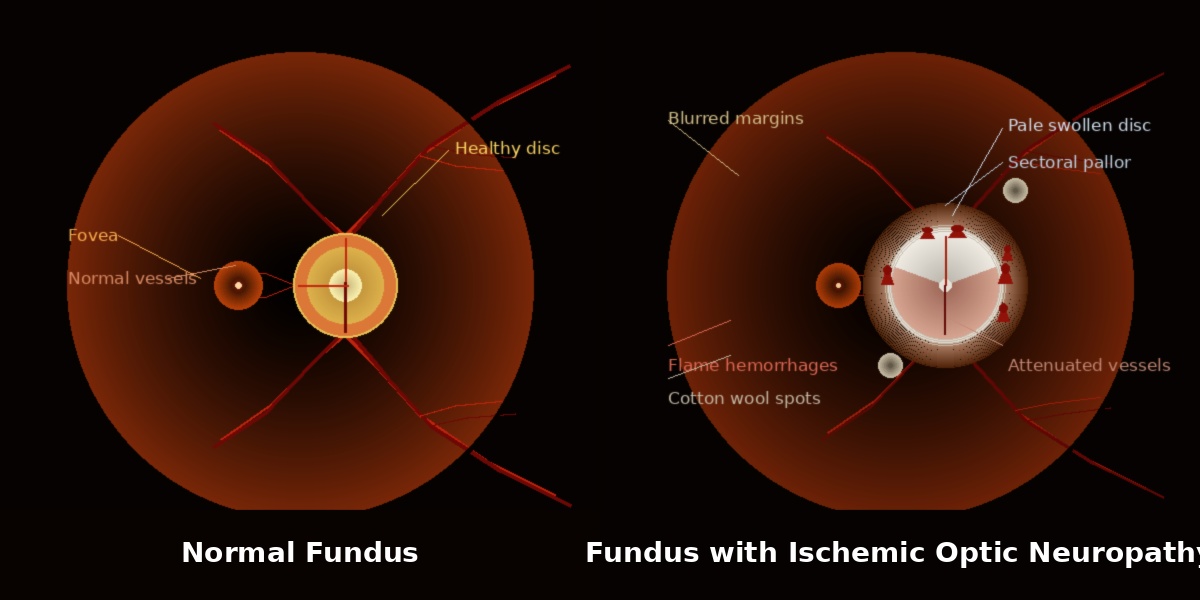
Ischemic optic neuropathy occurs when blood flow to the optic nerve is suddenly interrupted, leading to rapid nerve tissue damage. Often described as a ‘stroke of the eye’, it can cause immediate and significant vision loss, frequently affecting the upper or lower half of the visual field. Because it is a vascular event, early evaluation and management of the underlying circulatory risk factors is the priority in modern neuro-ophthalmological care.

10+
years Experience
5000+
Patients treated
100+
Countries served
NABH
Guided facility

    Send Your Medical Reports

    Causes

    The condition is classified into arteritic and non-arteritic forms. Non-arteritic ischemic optic neuropathy, the more common type, is linked to high blood pressure, diabetes, and sleep apnea, which restrict blood flow through the small vessels feeding the optic nerve. The arteritic form is caused by inflammation of the arteries (giant cell arteritis) and needs urgent systemic treatment to prevent vision loss in the other eye.

    Symptoms

    The most common presentation is sudden, painless vision loss in one eye, often noticed on waking. Patients frequently describe a “shadow” or “curtain” covering part of their vision, typically affecting the upper or lower half of the visual field.

    Diagnosis

    Diagnosis involves examining the optic nerve head, which often appears swollen or pale. Blood tests (ESR, CRP) help rule out giant cell arteritis, and fluorescein angiography may be used to visualise blood flow within the eye’s vessels.

    Treatment — Stem Cell Therapy

    Managing the underlying vascular risk factors — blood pressure and blood sugar control — remains the medical priority. Stem cell therapy is studied for its potential to support tissue affected by reduced blood flow, considered alongside, never instead of, ongoing management of those risk factors.
    Meet The Team

    Our Eye Specialists

    Male doctor icon with stethoscope symbolizing healthcare professional.

    Dr. Pawan

    Associate Professor, Vitreo-Retina Surgeon. 10+ Years Experience

    Retinal disorders, diabetic retinopathy, and advanced retina procedures. Provides diagnostic evaluation and treatment planning for international patients.

    Female doctor icon with stethoscope symbolizing healthcare professional.

    Dr.Pallavee

    Senior Consultant Ophthalmologist & Eye Surgeon· 26+ yrs experience

    Areas of Focus: Cataract surgery, corneal disorders, refractive procedures, and glaucoma management. Provides comprehensive eye care and surgical expertise for global patients.

    Male doctor icon with stethoscope symbolizing healthcare professional.

    Dr. Robin

    Consultant Ophthalmologist & Eye Surgeon, MD, DO .16+ Years Experience

    Areas of Focus: Cataract surgery, corneal disorders, refractive procedures, and glaucoma management. Provides comprehensive eye care and surgical expertise for global patients.

    How Stem Cell Therapy May Help

    Mesenchymal Stem Cells (MSCs), typically sourced from bone marrow or umbilical cord tissue, are studied for their potential to support optic nerve tissue health, reduce inflammation, and help preserve remaining visual function. The cells are administered via a minimally invasive procedure — most often through a retrobulbar or intravitreal injection — under the supervision of our ophthalmology and regenerative medicine team. This approach does not restore vision already lost in advanced, complete optic atrophy, but may help support remaining nerve function and quality of life in suitable candidates.
    Reviews

    What Our Patients Say

    Male avatar icon in suit and red tie

    Prince

    I am very satisfied with the services at Stem Cell Cure. The team is very professional and knowledgeable. They provided good guidance and ensured every step of the process was smooth and comfortable

    Male avatar icon in suit and red tie

    Vishal

    Highly trustworthy! From consultation to follow-up, the team was responsive and dedicated. Excellent facilities and patient-focused approach!

    Frequently Asked Questions

    Will stem cell therapy control my blood pressure or diabetes?

    “No. Managing the underlying vascular risk factors remains essential and is handled by your treating physician. Stem cell therapy addresses the optic nerve tissue itself.”

    How soon after the event should I seek evaluation?

    ” Earlier evaluation generally allows a clearer picture of remaining optic nerve function, though our team can review reports at any stage.”

    How is it diagnosed?

    “Through a detailed eye exam, visual field testing, and examination of the optic nerve. Blood tests (like ESR and CRP) are done urgently to rule out giant cell arteritis, especially in patients over 50, since this needs immediate treatment.”

    Child undergoing eye exam with optometrist adjusting trial frame.
    Translate »
    Riya

    Contact Us

    We would love to hear from you! Please fill out the form below.