
Bile Syndrome Eye Disease

Bile Syndrome Eye Disease

Bile Syndrome Eye Disease refers to the rare but severe optical complications arising from natural corrosiveness Acid Synthesis diseases (CBASDs). This metabolic condition prevents the body from producing primary bile acids, which are essential for the immersion of fat-answerable vitamins similar to Vitamin A and Vitamin E. Without these nutrients, the retina and optical nerves begin to deteriorate, leading to the clinical incarnation of Bile Syndrome Eye Disease. Because the eye depends on these specific vitamins for photoreceptor health and nerve conduction, Bile Syndrome Eye Disease can bring endless vision loss if the underlying systemic failure is not addressed through technical medical intervention.
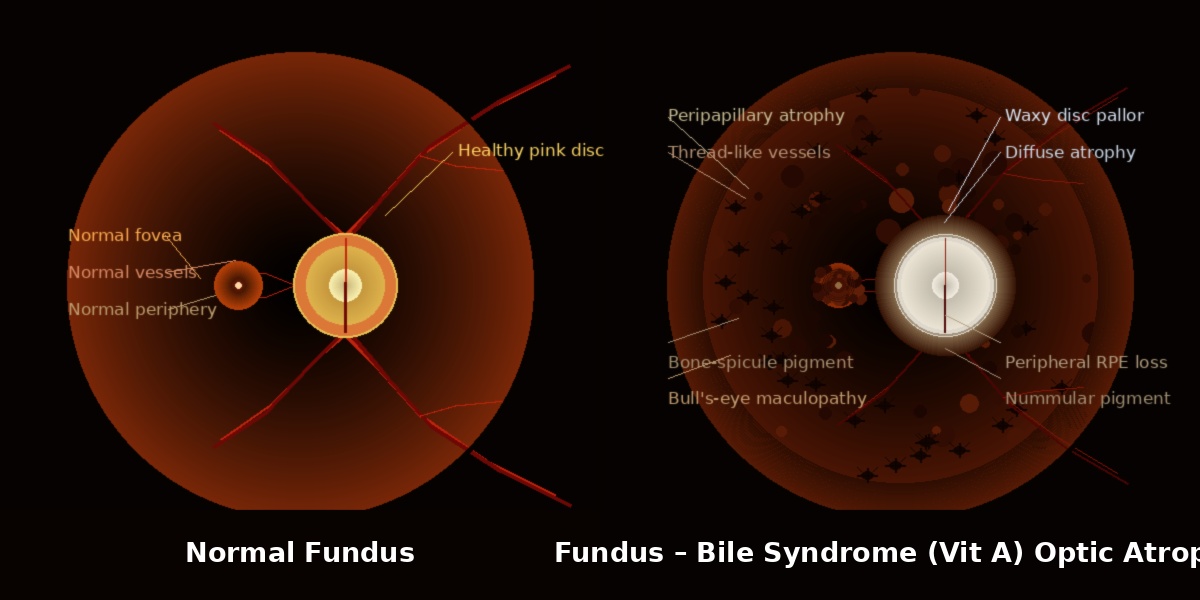
Medical comparison of retina and optic nerve degeneration in bile syndrome optic atrophy

Causes

The primary cause of Bile Syndrome Eye Disease is an inheritable mutation in the enzymes responsible for bile acid products, similar as the HSD3B7 or AKR1D1 genes. This insufficiency leads to an accumulation of poisonous intermediate metabolites and a complete lack of essential vitamins in the optical tissues. In Bile Syndrome Eye Disease, the "starvation" of the retinal color epithelium leads to secondary optical nerves reddishness. Relating the metabolic nature of Bile Syndrome Eye Disease is pivotal, as it distinguishes this condition from purely structural eye diseases.

Symptoms

The foremost symptoms of Bile Syndrome Eye Disease frequently include nyctalopia, or night blindness, followed by a progressive narrowing of the visual field. Cases may also develop "Bitot’s spots" on the conjunctiva, which are clinical emblems of the Vitamin A insufficiency associated with Bile Syndrome Eye Disease. As the complaint progresses, the optical nerves begin to show signs of atrophy, performing in an endless loss of visual perceptivity and poor color demarcation.

Opinion

Diagnosing Bile Syndrome Eye Disease requires a combination of serum bile acid analysis and inheritable sequencing. Ophthalmologists use Electroretinography (ERG) to measure the electrical response of the eye's light-sensitive cells, which frequently shows diminished exertion in cases of Bile Syndrome Eye Disease. A comprehensive eye test will also reveal characteristic pigmentary changes in the retina and paleness of the optical slice, attesting the extent of the damage caused by Bile Syndrome Eye Disease.

Treatment- Stem Cell Remedy

Stem cell remedy offers a revolutionary approach to stabilizing the neural terrain in Bile Syndrome Eye Disease. By introducing regenerative cells, this treatment seeks to repair the damage to the retinal layers and give neurotrophic support to the optical nerve. In the environment of Bile Syndrome Eye Disease, stem cells can help modulate the seditious response caused by poisonous metabolites. This regenerative strategy aims to bridge the gap between systemic bile acid relief and factual visual restoration, offering a new horizon for cases living with Bile Syndrome Eye Disease.

    Translate »