Leber Hereditary Optic Neuropathy (LHON) Treatment in India

Leber Hereditary Optic Neuropathy is a rare, mitochondrially-inherited condition that causes sudden, painless central vision loss. It primarily affects young men, though it can occur at any age and in any gender. Because it is passed down through mitochondrial DNA, it typically affects one eye first, with the second eye following within weeks to months. Research into LHON has expanded significantly, focusing on how to work around the inherited mitochondrial defect to support visual function.

10+
years Experience
5000+
Patients treated
100+
Countries served
NABH
Guided facility

    Send Your Medical Reports

    Causes

    The condition is caused by specific mutations in mitochondrial DNA that impair energy production within optic nerve cells. When these cells cannot generate enough energy, they begin to die, leading to the progressive vision loss seen in LHON. Because mitochondrial DNA is inherited through the maternal line, family history on the mother’s side is an important factor.

    Symptoms

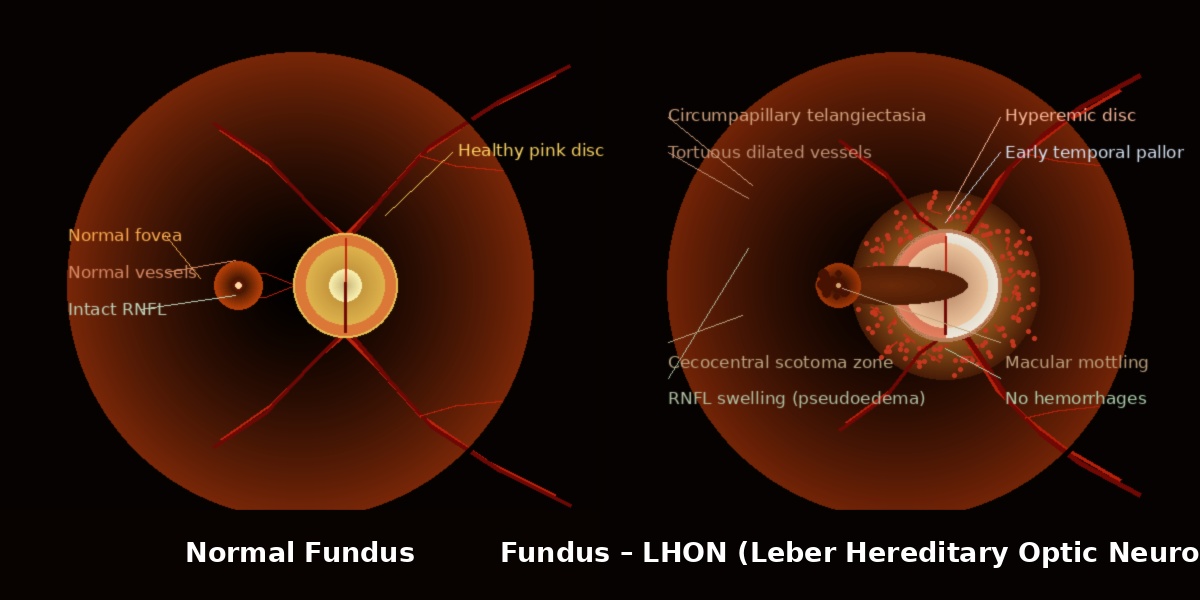
    The first symptom is usually blurring or ‘cloudiness’ in the centre of the visual field. Over time, this develops into a dense blind spot (scotoma), making reading and facial recognition increasingly difficult. Unlike many optic nerve conditions, LHON typically does not cause pain, which can make the sudden loss of clarity especially distressing.

    Diagnosis

    Genetic testing is the gold standard for confirming the mitochondrial mutations associated with LHON. Electrophysiology tests such as the Visual Evoked Potential (VEP) assess the nerve’s signalling capacity, and clinical examination of the optic disc often reveals small, telangiectatic (dilated) blood vessels in the early stages.

    Treatment — Stem Cell Therapy

    Stem cell therapy is studied as a supportive approach for the metabolic vulnerability of the optic nerve in LHON. By supporting nerve tissue with healthy, metabolically active cells, this regenerative strategy focuses on preserving remaining nerve function rather than reversing the underlying genetic defect, which currently has no proven cure.
    Meet The Team

    Our Eye Specialists

    Male doctor icon with stethoscope symbolizing healthcare professional.

    Dr. Pawan

    Associate Professor, Vitreo-Retina Surgeon. 10+ Years Experience

    Retinal disorders, diabetic retinopathy, and advanced retina procedures. Provides diagnostic evaluation and treatment planning for international patients.

    Female doctor icon with stethoscope symbolizing healthcare professional.

    Dr.Pallavee

    Senior Consultant Ophthalmologist & Eye Surgeon· 26+ yrs experience

    Areas of Focus: Cataract surgery, corneal disorders, refractive procedures, and glaucoma management. Provides comprehensive eye care and surgical expertise for global patients.

    Dr. Robin

    Consultant Ophthalmologist & Eye Surgeon, MD, DO .16+ Years Experience

    Areas of Focus: Cataract surgery, corneal disorders, refractive procedures, and glaucoma management. Provides comprehensive eye care and surgical expertise for global patients.

    How Stem Cell Therapy May Help

    Mesenchymal Stem Cells (MSCs), typically sourced from bone marrow or umbilical cord tissue, are studied for their potential to support optic nerve tissue health, reduce inflammation, and help preserve remaining visual function. The cells are administered via a minimally invasive procedure — most often through a retrobulbar or intravitreal injection — under the supervision of our ophthalmology and regenerative medicine team. This approach does not restore vision already lost in advanced, complete optic atrophy, but may help support remaining nerve function and quality of life in suitable candidates.
    Reviews

    What Our Patients Say

    Male avatar icon in suit and red tie

    Prince

    I am very satisfied with the services at Stem Cell Cure. The team is very professional and knowledgeable. They provided good guidance and ensured every step of the process was smooth and comfortable

    Male avatar icon in suit and red tie

    Rahul Kushwaha

    Stem Cell Cure India made me believe in the treatment right from the first consultation. The doctors went through the therapy in depth and the staff was always there to help. I was secure and respected during my procedure

    Frequently Asked Questions

    Is there a cure for LHON?

    “Not currently. There is no treatment that corrects the underlying mitochondrial mutation. Care focuses on supporting remaining visual function and monitoring for any spontaneous recovery, which occurs in a minority of cases.”

    Should family members be tested?

    “Genetic counselling is recommended for at-risk maternal relatives, as this helps with early monitoring and informed family planning decisions.”

    Is stem cell therapy suitable for everyone with LHON?

    “Suitability depends on how much viable optic nerve tissue remains and the stage of disease; our team reviews genetic and OCT/visual field results before advising on realistic expectations.”

    Child undergoing eye exam with optometrist adjusting trial frame.
    Translate »
    Riya

    Contact Us

    We would love to hear from you! Please fill out the form below.